


Your rep leans back after a discovery call and says, “I’ve got a good feeling about this lead.”
It sounds confident—charming, even.
But while your team trusts instincts, your competitor is running with hard evidence. They already know which leads matter, how to reach them, and what it takes to win.
How? They’re using B2B sales intelligence.
What’s B2B Sales Intelligence?
B2B sales intelligence is the process of collecting, analyzing, and using data that helps sales teams make better decisions.
It combines customer data, market trends, and company signals to give clear guidance on which leads matter, what they care about, and how likely they are to buy.
Think of it as a GPS for your sales process. Instead of wandering from one lead to the next, you have a map showing where to go first and how to get there.
A good sales intelligence platform collects signals from multiple sources: CRM activity, emails, calls, social media, and even public company data. It analyzes patterns and turns them into actionable sales intelligence. With this, reps know which opportunities to pursue and which to deprioritize.
Why It Matters in 2025
Selling in 2025 looks nothing like it did five years ago. Buyers move faster, expect personalization, and have no patience for irrelevant outreach. Competitors are sharper because they’re armed with AI-driven intelligence.
B2B sales intelligence matters now because:
- Lead prioritization is no longer optional. Your competitor already uses a sales intelligence platform that ranks leads by conversion potential. If you’re still relying on who “feels hot,” you’re behind.
- Personalization drives every win. Buyers expect messaging that speaks to their industry, company size, and role. Sales intelligence software helps you tailor outreach so it resonates instead of sounding generic.
- Retention has become just as critical as acquisition. Predictive models can now flag accounts at risk of churning. So, apart from chasing new business, companies also use sales intelligence to safeguard the customers they already have.
Gut-Driven Sales vs. Intelligence-Driven Sales
Picture two teams chasing the same deal.
- Gut-driven: A rep notices the buyer was smiling during a call. She thinks this is a good sign and decides to keep pushing with standard follow-up emails. Weeks pass with no real progress.
- Intelligence-driven: A rep uses a sales intelligence software that shows the buyer’s company just raised a Series B round and is hiring for three roles that match the product’s value proposition. The software also highlights positive language during the call transcript and assigns the opportunity a high score. The rep personalizes the follow-up, connects the product to the company’s funding milestone, and gets a signed contract in days.
That is the difference between hope and clarity. Gut may win occasionally, but B2B sales intelligence wins systematically.
Real Use Cases of B2B Sales Intelligence
The best way to see the power of sales intelligence is through real-world scenarios. Here are three areas where it changes the game:
1. Lead scoring
A sales intelligence platform can score leads automatically based on behavior, firmographics, and interaction history.
For instance, if a prospect has engaged with multiple webinars, visited your pricing page, and asked about integrations on a sales call, the tool flags them as high priority.
This means reps don’t waste energy chasing the wrong accounts. Instead, they can focus on the prospects most likely to buy.
2. Opportunity prioritization
Not every opportunity deserves the same amount of attention. Sales intelligence software highlights which deals are moving forward and which are stalling.
For example, if a key decision-maker suddenly stops attending calls or responding to emails, the system alerts the rep. They can then adjust strategy before the deal slips away.
3. Competitive intelligence
Actionable sales intelligence also helps teams stay sharp against competitors. By analyzing call transcripts, intelligence platforms can identify when competitors are being mentioned, what objections are raised, and which features resonate with buyers.
The result? Reps no longer walk into deals blind. They know what the competition is offering and can adjust their pitch accordingly.
Goodmeetings: The Ultimate B2B Sales Intelligence Tool
Sales intelligence software is only as strong as the data feeding it. If the majority of customer conversations are not captured, intelligence will always be incomplete.
This is where Goodmeetings comes in.
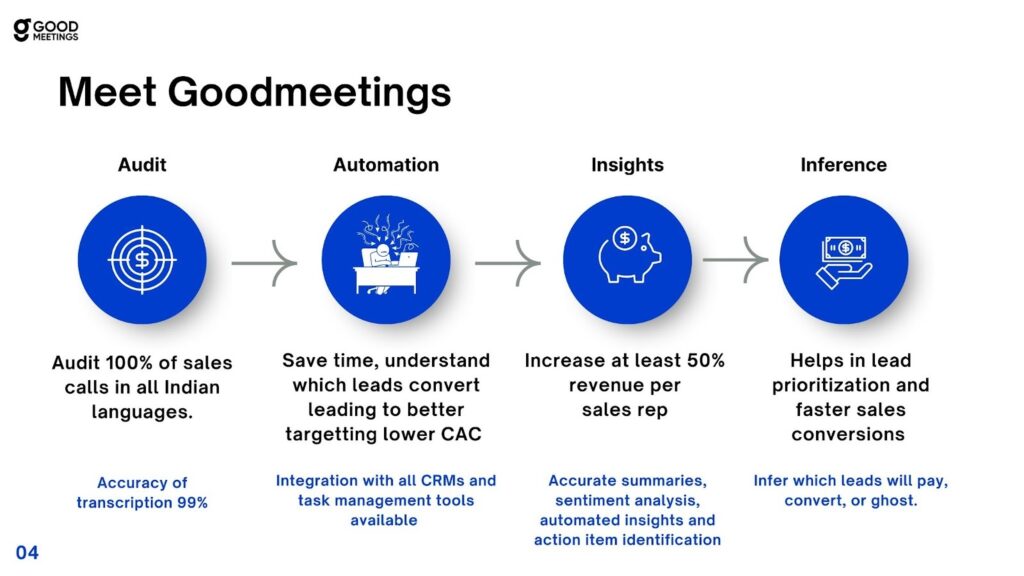
This AI-powered tool records and audits 100% of sales calls. It doesn’t matter if it’s a quick discovery chat or a long demo. Every word, every question, every objection gets logged. From there, insights can be analyzed at scale.
Why does this matter? Because call data is the richest source of buyer intent. Competitors, objections, enthusiasm, and concerns all live in those conversations.
And thanks to full coverage from Goodmeetings, your reps can get the clarity they need to move from instinct-driven selling to decisions backed by reliable insights.
Key features
- Automatically generates accurate sales call transcripts and summaries for easy recall, collaboration, and compliance
- Supports 200+ languages during calls, including English, French, Spanish, Hindi, and Japanese
- Allows you to find any detail across past meetings by searching titles, client/participant names, or transcript content
- Highlights the most critical turning points in meetings so your team can focus on the insights that drive deal outcomes
- Creates customized, downloadable meeting reports with attendees, highlights, questions, and action items for professional follow-ups
- Provides client reports that track client interactions over time with timeline graphs, probability scores, and customer health analysis
- Automatically syncs call data directly into CRM platforms like HubSpot and Salesforce
- Offers pitch reports that analyze sales presentations with metrics on engagement, feedback, and effectiveness
- Provides a pitch report analytics dashboard where you can monitor rep performance, track KPIs, and identify coaching opportunities
- Lets you import external meetings into the platform for transcription, analysis, and central storage
Move From Gut Feeling to Genius. Audit 100% of Calls With Goodmeetings
The Takeaway
Gut instinct will always have a place in sales. Reps still need to read the room, build trust, and adapt in the moment. But the difference between winning and losing in 2025 is who backs that instinct with intelligence.
Teams that combine human skill with B2B sales intelligence will close more deals, protect more accounts, and outpace competitors. The choice is simple: keep guessing, or start knowing.