


Numbers don’t lie, but your dashboard probably does.
Hold on. Let’s explain.
Most sales leaders have sat through weekly pipeline reviews where charts look beautiful, but no one can answer the real questions. Why is this deal stalling? Which reps are struggling to handle objections? What patterns keep repeating in lost opportunities? The dashboard says everything is green, but your gut says otherwise.
That’s because most dashboards were built for reporting, not for selling. They show totals, averages, and percentages, but rarely highlight the “why” behind those numbers. You end up with a pile of vanity metrics that look impressive but do nothing to help a rep close their next deal.
Sales analytics in 2025 looks different. With AI, analytics tools no longer stop at counting activities. They:
- Surface trends you would never spot on your own
- Point out deals at risk before it is too late
- Coach reps in the moment instead of waiting until the quarter is lost
Research backs this up: 80% of reps working on teams that use AI say it’s easy to get the customer insights they need to close deals, compared to just 54% at organizations without AI.
In this blog, we’ll break down what real sales analytics looks like today, the difference between vanity and actionable metrics, and 5 sales analytics tools that actually tell you the truth.
What Real Sales Analytics Looks Like in 2025
Sales analytics has grown beyond static dashboards. The best tools today combine AI, conversation intelligence, and forecasting to help teams win deals faster.
Let’s take a brief look at what they deliver:
- Trend detection: AI picks up on deal risks like stalled next steps, pricing objections, or competitor mentions long before they show up in CRM notes.
- Rep coaching: Managers can see which questions reps avoid or where they lose control of conversations, then give targeted coaching.
- Forecast accuracy: By analyzing every call and email, AI creates a better view of which deals have true potential and which are just wishful thinking.
- Cycle efficiency: According to a 2025 LinkedIn report, AI shortens the sales cycle by about one week on average, which compounds into more closed deals across the year.
- Higher quota performance: The aforementioned report also reveals that top performers are 2.5 times more likely to use AI daily compared to those who fall short.. That alone says everything about where the future is heading.
Vanity Metrics vs. Actionable Metrics
Vanity metrics consist of numbers that look shiny in a report but rarely improve performance:
- Number of calls made
- Emails sent per rep
- Meetings scheduled
- Average time on calls
They are easy to measure, which is why they show up everywhere. But a rep making 100 calls a day can still miss quota if the calls are unqualified. A team blasting emails can still fall short if the messaging does not resonate.
Actionable metrics, on the other hand, connect activity to results. They show you what’s happening in your deals and where you can intervene to change outcomes. Examples include:
- Win rate by deal stage
- Objection patterns across calls
- Talk-to-listen ratios in conversations
- Coaching impact on rep performance
- Customer sentiment across touchpoints
The difference is huge. Vanity metrics tell you what happened. But actionable metrics? They inform you of what to do next.
5 Best Sales Analytics Tools in 2025
So which platforms actually deliver insights worth acting on? Here are the top options this year, broken down by their strengths, features, and pricing.
1. Goodmeetings
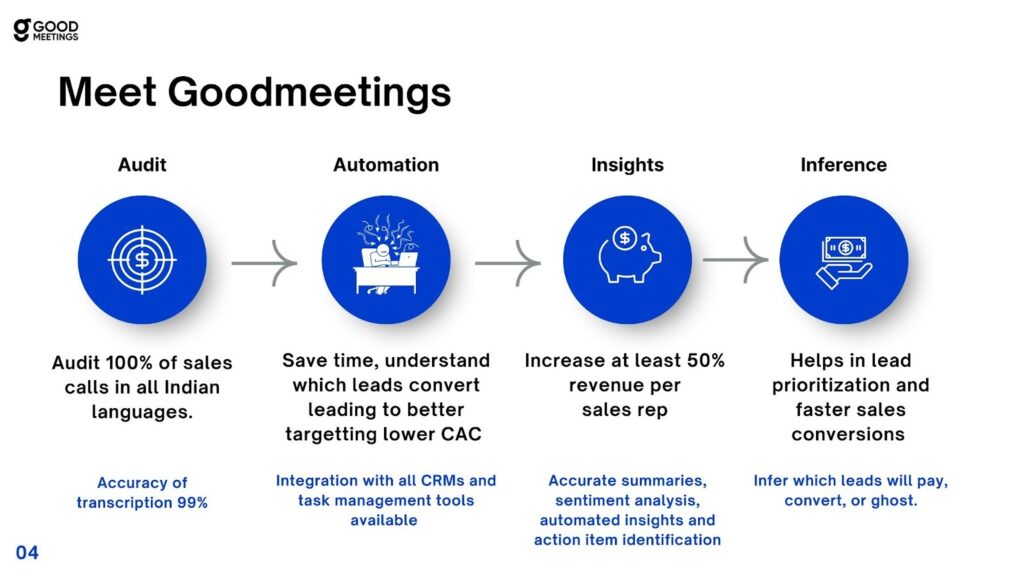
Goodmeetings has become one of the most trusted platforms for teams that want analytics they can act on, not just numbers that decorate a dashboard.
By auditing every sales meeting, it gives leaders and reps the clarity to understand what drives progress in the pipeline.
The platform goes beyond reporting: it highlights opportunities, uncovers risks, and equips teams with the context they need to coach better and close faster.
For analytics to be meaningful, they must reflect the details of customer conversations, and this is where Goodmeetings excels. It provides summaries, reports, and AI-driven insights to give a full picture of client relationships—from the quality of pitches to the likelihood of conversion.
With automation that keeps CRMs updated and dashboards that track performance, Goodmeetings saves time while improving accuracy across the board.
Key features
- Automatically generates meeting transcripts & summaries that teams can review, share, and store for compliance; Goodmeetings supports 200+ languages, including English, Spanish, Hindi, and Japanese
- Creates client reports that show interaction history, sales probability scores, and customer intent to help teams prioritize the right opportunities
- Analyzes sales presentations to measure engagement, assess objections, and score effectiveness for continuous improvement
- Helps you monitor team performance with KPIs, visual trends, and exportable data for deeper reporting
- Automatically updates CRM records with call details to save time and reduce errors
- Generates downloadable meeting reports with attendees, highlights, key questions, and next steps to support follow-ups
- Has a search function that allows users to locate any conversation quickly by searching titles, participants, client names, or transcript content
- Spotlights the most critical turning points in a meeting so teams can revisit highlights that influence outcomes without reviewing the full call
- Imports external meeting recordings, transcribes them, and applies analytics to help teams centralize data in one place
Pricing
Custom. 14-day free trial + free demo available.
Want Analytics You Can Trust? Start by Auditing Every Call With Goodmeetings.
2. Salesloft
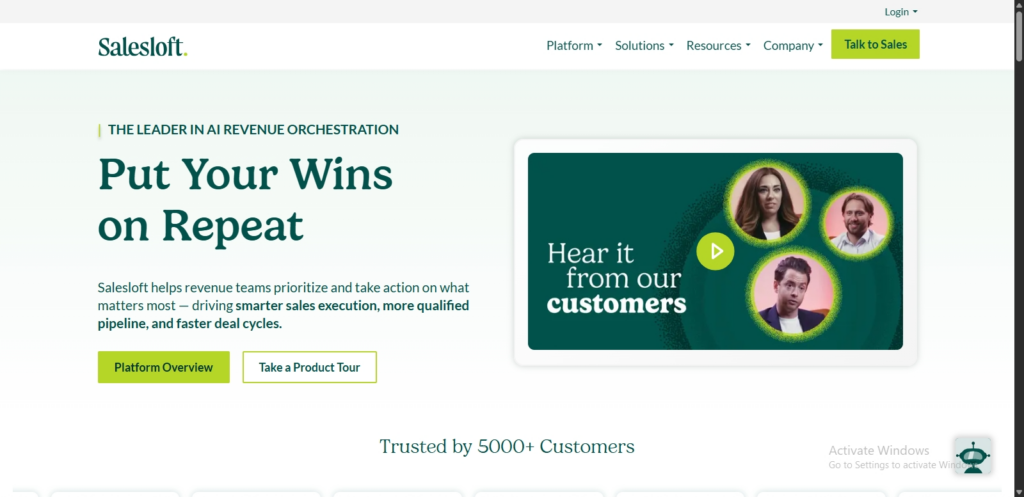
Salesloft is a revenue orchestration platform that helps teams prioritize the right actions, execute them efficiently, and measure their impact across the buyer journey.
It combines engagement tools with AI-driven insights, allowing leaders to track deal health, improve forecasting, and coach reps with data they can trust.
Key features
- Guides reps through outreach with AI-driven workflows that generate and nurture pipelines
- Analyzes calls and meetings to uncover coaching opportunities and highlight buyer signals
- Provides deal-level analytics that reveal risks, blockers, and actions needed to accelerate opportunities
- Combines AI with human insight to improve forecast accuracy and revenue planning
Pricing
Custom
3. Salesforce Sales Cloud
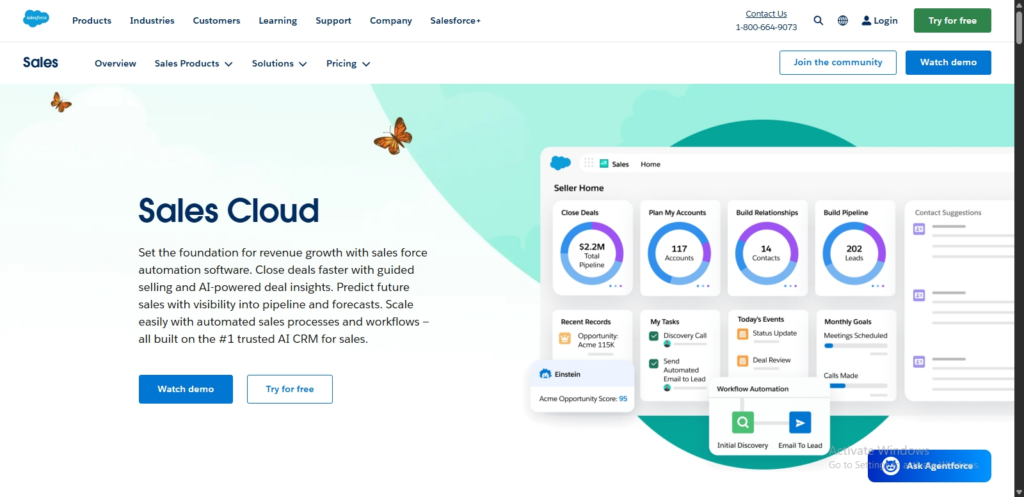
Next on our list is Salesforce Sales Cloud, an automation tool that teams can use to streamline selling, strengthen customer relationships, and make faster, smarter decisions with AI-driven insights.
It connects data across teams so sellers know which opportunities to focus on and what actions to take to keep revenue moving.
Key features
- Automatically captures emails, events, and other engagement details directly in CRM
- Builds accurate forecasts in real time with tailored metrics that match business goals
- Tracks and nurtures leads through every stage of the sales cycle
- Monitors deal progress & identifies which opportunities need attention
- Provides customizable reports and dashboards that track sales performance and team activity
Pricing
- Starter Suite: $25/user/month (billed monthly or annually)
- Pro Suite: $100/user/month (billed annually)
- Enterprise: $175/user/month (billed annually)
- Unlimited: $375/user/month (billed annually)
- Agentforce 1 Sales: $550/user/month (billed annually)
30-day free trial available.
4. Close
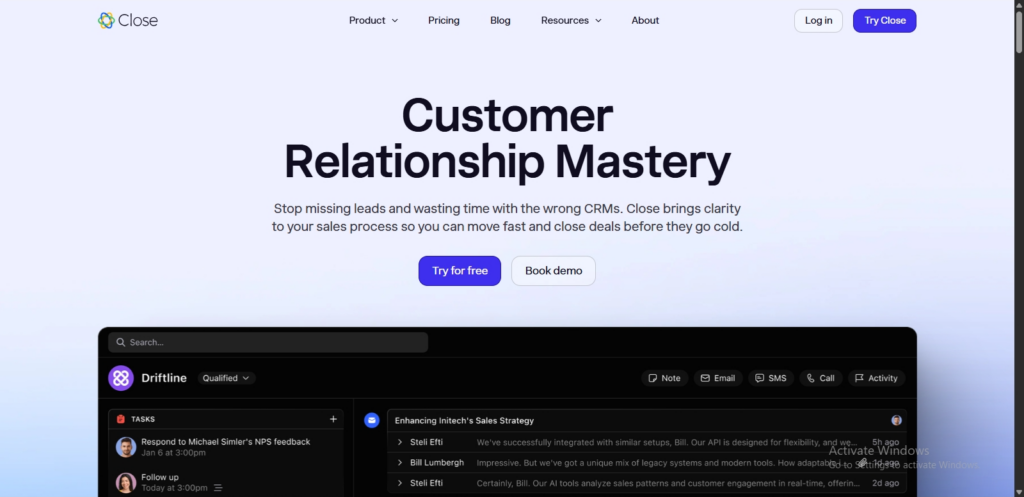
Close is a CRM platform built to speed up the sales process without piling on extra complexity.
It brings communication, automation, and reporting together so teams can focus on moving deals forward.
With AI-powered tools and a simple interface, Close helps sales teams stay productive and confident in every step of the cycle.
Key features
- Has built-in calling, emailing, SMS, and calendar tools
- Offers sales funnel reports that track sales velocity and conversion rates
- Enables you to accurately forecast sales performance and analyze funnel health with a unified pipeline view
- Provides an AI-powered notetaker to transcribe and summarize meetings
Pricing
- Essentials: $49/seat/month ($35/seat/month billed annually)
- Growth: $109/seat/month ($99/seat/month billed annually)
- Scale: $149/seat/month ($139/seat/month billed annually)
- Custom pricing for large teams
14-day free trial available.
5. Pipedrive
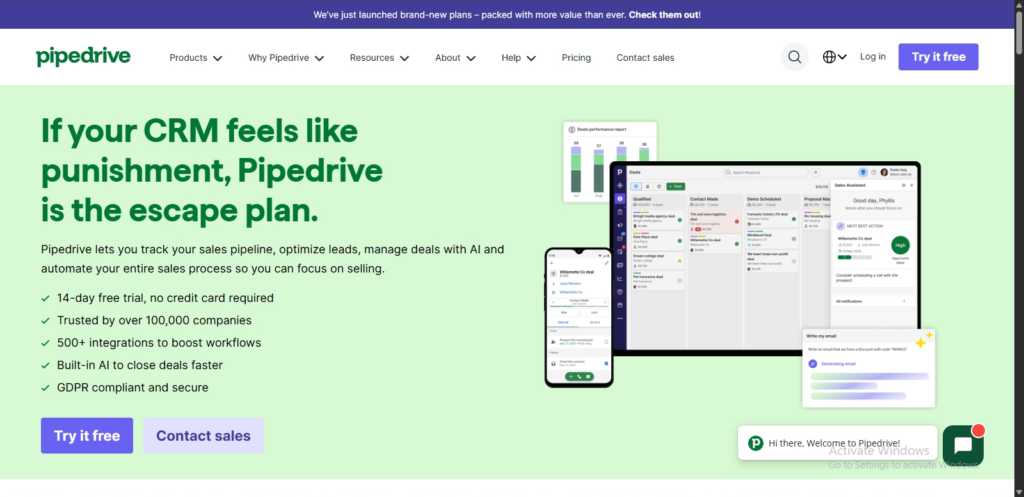
This sales analytics tool is designed to help salespeople stay focused on deals from start to finish. It gives teams the tools to organize pipelines, track communication, and use data to guide their next moves.
With automation and AI built in, Pipedrive reduces repetitive work and helps reps act faster.
Key features
- Offers automated lead tracking
- Helps teams set goals and measure progress with visual reports and dashboards
- Provides an AI Sales Assistant that predicts which deals you’re most likely to win or lose
- Outlines and visualizes different stages of your sales process so you can plan CRM activities
- Integrates with 500+ business apps
Pricing
- Lite: $24/seat/month ($14/seat/month billed annually)
- Growth: $49/seat/month ($39/seat/month billed annually)
- Premium: $79/seat/month ($49/seat/month billed annually)
- Ultimate: $99/seat/month ($79/seat/month billed annually)
14-day free trial available.
Conclusion
The best sales analytics platform for your team ultimately depends on what you want to achieve and how your reps work every day. Some tools excel at pipeline tracking, others lean into automation, and a few focus heavily on communication.
What sets Goodmeetings apart is its ability to capture the voice of the customer and turn every conversation into practical guidance for sellers and managers alike. When data reflects real interactions, it becomes a reliable foundation for your entire sales process.